

Students who feel connected to your campus are more likely to stay enrolled, graduate on time, and step into their careers with confidence. To instil a sense of belonging, your school needs to engage students, both academically and socially.
By prioritising student-centric learning and participation in campus life, you can improve engagement across your campus and prepare students for life beyond graduation. You just need the right tools to make it happen.
To help you evaluate student engagement software for your institution, we’ll cover five key features to look for.
1. Centralised communication tools
Engaging your entire diverse student population can be a challenge. To solve this, Ready Education recommends selecting student engagement software with centralised communication tools that allow you to connect with students and enable students to connect with one another.
As you evaluate different solutions, look for these communication features:
- A dynamic community feed. A central discussion feed allows all students, whether they’re on campus or remote, to discover campus news, share updates, ask questions, and interact with peers in a social-media-style environment.
- Real-time chat messaging. Instant one-on-one and group messaging make it easy for students to connect with classmates, club officers, and staff.
- Targeted push notifications. Deliver alerts, event reminders, and updates to specific student segments to provide every recipient with messages relevant to them.
Centralising campus updates and social networks helps students spend less time digging through scattered messages and more time participating in campus life.
2. Event and organisation management
Your students will organically form clubs, groups, and even societies. You just need to give them the tools to do so. Help your students engage their personal communities by looking for event and organisation management software.
Features that can empower student leaders and event managers on your campus include:
- Online voting and elections. Digital voting tools can increase turnout for student government and small club elections alike.
- Budgeting and approval tools. Centralised budgeting tools enable student organisations to manage their funds responsibly and speed up approvals for event expenses.
- Tracking and reporting. QR code attendance tracking helps your institution eliminate manual processes and welcome students to campus events more efficiently. Choose a solution that automatically pulls attendance data to create attendance analytics and reports that your team can use to inform future programming.
Reviewing event attendance data can help you discover what activities resonate most with your students. With this information, you can better allocate funding towards the types of programming that consistently engage students.
3. Student journey management and incentives
A clear path from freshers’ orientation to graduation, with a few rewards built in along the way, gives students a reason to get involved with activities outside the classroom. Look into platforms built around guided pathways and incentives that include digital credentials and badges that give students the extra motivation they need to get involved.
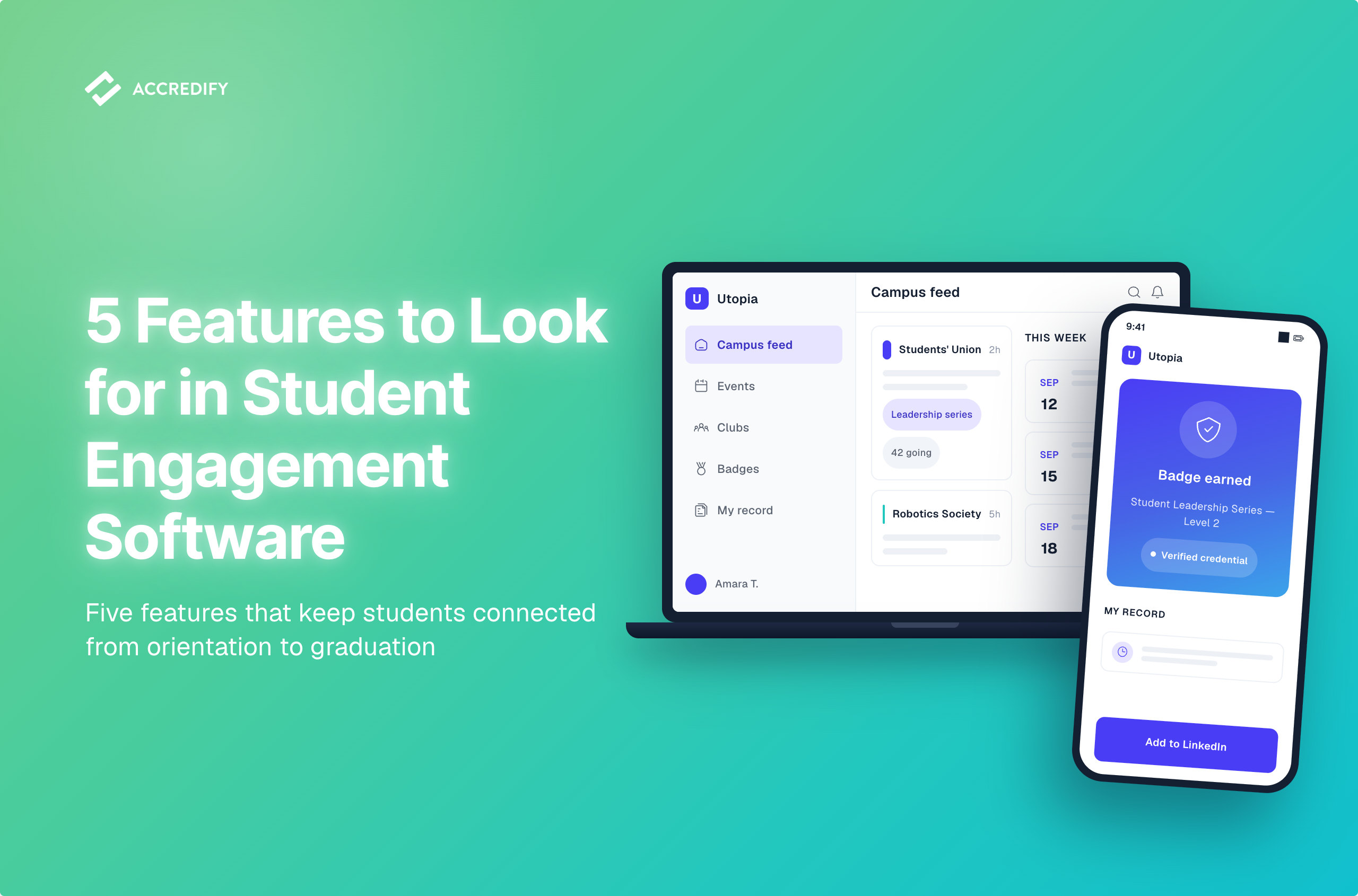
A digital badge turns a workshop or a volunteer shift into something worth bragging about. Look for a platform that lets students earn badges for hitting milestones, like finishing a leadership series or logging a certain number of service hours. Some activities may even let students earn verified credentials that they can add to their LinkedIn profiles.
Additionally, a GPA doesn’t capture everything a student does at university. Leadership roles, service hours, and club involvement deserve a record, too. Choose student engagement software that can pull each student’s activities into a co-curricular transcript that they can submit to graduate school or future hiring managers alongside their academic transcript.
4. Integration with your institution’s systems
Make sure your engagement platform integrates with the rest of your institution’s technology. This includes your student information system (SIS), learning management system (LMS), and single sign-on (SSO) setup. Once your institution connects all of these pieces, students can check grades, book tutoring appointments, and sign up for events without juggling multiple separate logins. For staff, when academic information and campus involvement data are stored in the same place, they can proactively identify disengaged or at-risk students.
Heller Consulting notes that aligning new and existing systems can help improve staff buy-in during transition periods, such as adding new software. Make the transition process as smooth as possible by providing staff with both hands-on training sessions and instruction guides they can refer back to.
5. A unified campus experience
A unified digital experience means students can find what they need in one place, no matter where they start looking. To power student success, choose engagement software that works the same way across every device.
To meet students where they are, look for a platform that offers:
- A branded mobile app. A custom mobile app puts your institution’s resources into students’ pockets, ensuring accessibility on the go.
- A smooth web experience. Some students prefer a full dashboard on a laptop. A clean, well-designed web portal makes it easy for them to explore everything going on around campus and find events they might otherwise miss.
- A hub builder. Empower different departments to build customised, localised hubs within your software’s main platform. This lets them maintain their unique identity while staying connected to the broader campus.
Additionally, be on the lookout for user-friendly navigation features. When students instinctively know how to navigate your platform, they spend less time searching for information and more time engaging with your campus.
A well-connected campus keeps students engaged and allows your institution’s administrators to pinpoint who might need additional support. Implementing the right student engagement software helps you keep students motivated throughout their academic journey, setting them up for lasting success after graduation.
Book a demo to learn more about how verifiable credentials can be implemented in your institution.
Book a demo →